Storytelling 101
Part One: Brainstorming
The first step to write a good story is to come up w vague idea of the story you want to tell.
Brainstorm and word-dump everything that comes to mind.
| Setting? | Conflict? | Vibes? |
|---|---|---|
| Victorian era, futuristic society, totalitarian regime… | Someone gets drafted into a war, aliens take over, you get dumped… | Comedic and silly, scary and horrific, quiet and quaint.. |
Eventually, tie it all together to form an original concept.
💡 Tip! Write a one sentence description or summary of the plot to tie all your ideas together - a short synopsis!
As an example… “When a young boy vanishes, a small town uncovers a mystery involving secret experiments, terrifying supernatural forces and one strange little girl.” You might recognize this as the synopsis of the first season of Stranger Things.
Part Two: Characterization
Know your characters! A good story centres around its characters. The majority of your story’s plot should rely on your characters’ reactions and growth. Make your audience care, make your audience root for your character!
Take the time to flesh them out. Characters profiles are a great idea! Here are somethings to consider:
- Basic information
- Physical appearance (sketch them out!)
- Personality
- Vibe
- Likes/Dislikes
- Goals, ambitions
- Values
- Backstory (ex: pre-existing trauma :,)
You can find more character profile templates on Reedsy or on Pinterest! A quick Google search will also give you a lot of options!
Wait, but you’re not done just yet with your little guy… once you know your character, consider their journey: their character arc! Character arcs move the forward the plot and enable a character’s growth.
A good place to start would be to consider the following:
Character wants [...] but [conflict] so [growth/change].When you have your basics down, draw out a plan for your plot with your character’s arc in consideration.
| Status Quo | Conflict | Response | Impact |
|---|---|---|---|
| What is their normal? | What interrupts their normal and forces them to change? | What choice do they make as a response to the interruption? | How does this choice affect them/their growth/the status quo/the plot? |
When brainstorming your conflict, consider the three different types of conflicts that you implement into your plot:
- Internal conflicts: This is a character’s conflict with themselves. A character needs to get over their fear of heights.
- External conflicts: This is a character’s conflict with an outside form, such as another character(s), society, or nature. A character gets drafted to war.
- Both: A combination of the two. A character needs to get over their fear of heights to win a war.
Usually, a character arc is linked to a character’s internal conflict, which is often resolved with the help of an external pressure or conflict that forces them to change and grow.
Part Three: Plot Structure
Now onto the best part… figuring out what your story will actually look like!
Most stories follow the same or similar narrative patterns and structures. These structures can serve as a guide and a reference to how your story could unfold narratively.
| Three Act Structure | Save the Cat | Hero’s Journey |
|---|---|---|
 | 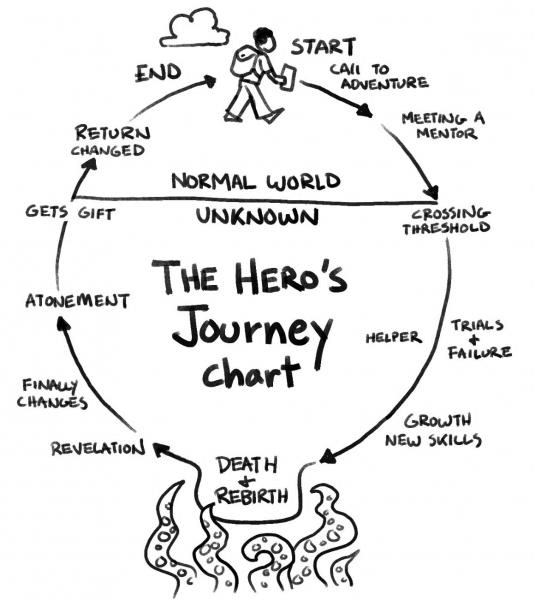 | |
| The most commony followed! | A template for 15 plot points that make a great story, follows the three act structure. | Most character focused structure! |
Disclaimer! You do NOT have to follow any story structures.
This may sound counterintuitive! But though story structures do provide you with a good overview of what your story needs to cover, you do NOT have to follow it word per word. Some of the best stories I have ever read do not follow these structures.
Make your own twists! Don’t limit yourself, and go with what works with your own creative process. Implement nonlinear storytelling, unreliable narrators… these things may be considered “unconventional”, but can make your story much more interesting.
💡 Tip! Having said all of that, there is one thing I find a story MUST have: A status quo must be disturbed and changed, and characters must undergo a transformation.
Part Four: Miscellaneous
You’re pretty much all ready to spin up an amazing story! However… if you want your story to be memorable, to stick out, to be CAPTIVATING…I’ve got some tips for you!
Twists and Shock Factors
One way you can make your story more interesting… add a twist!
Some of the best stories are incredible because they are unpredictable. Something happens that the audience does not expect. A grand reveal is made that goes against everything the audience once believed to be true.
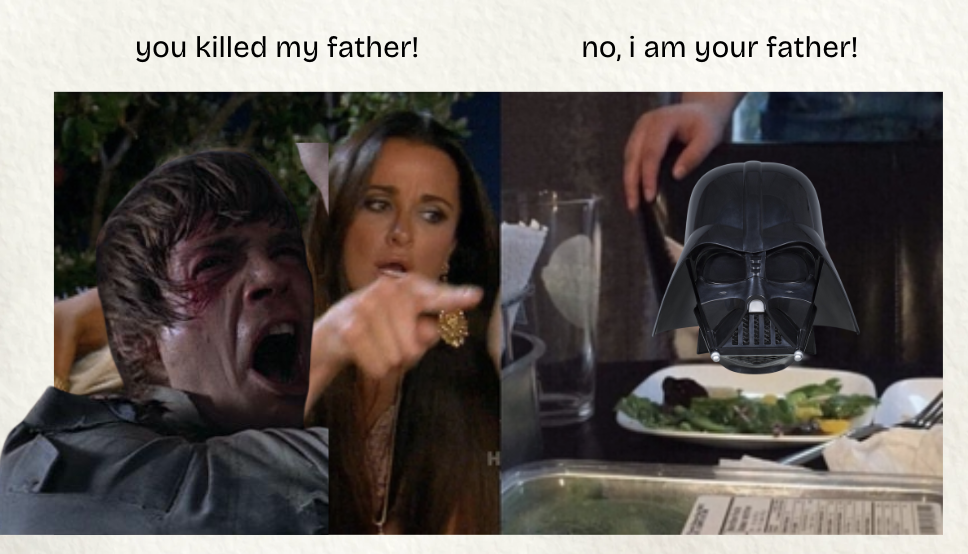
Some techniques / features you can add:
- Red herrings: Information or clues that are purposefully distracting or misleading, often used in mysteries.
💡 In the Sherlock Holmes’ story A Study in Scarlet (for BBC fans: A Study in Pink), the murderer writes the word “Rache” - revenge, in German - on the wall, misleading readers to think a German suspect is involved.
- Unreliable narrator: When the narrator, usually the protagonist, misleads the readers. This is a narrator whose credibility is not to be entirely trusted.
These narrators may hide, manipulate, or trick the readers and other characters. They may not necessarily have ill-intent; their unreliableness may stem from their psychological states (trauma, mental illness) or bias.
💡 Xie Lian - the main protagonist of Heaven Official’s Blessing - shares with the readers a very heavily distorted version of his past: he omits, he downplays, and glosses over facts due to severe trauma and low self-worth.
Conversely, an unreliable narrator can be as simple as an oblivious character who doesn’t believe their crush could like them back, even though there are… very obvious signs. They just don’t pick them up as romantic.
- Ally -> Bad Guy: This is a classic: a plot twist where an established ally is revealed to be working against the protagonist all along.
💡 Hans from Frozen… Everyone and their mamas were clutching their pearls and gasping at that cruel reveal in 2013.
Cherkov’s Gun
Cherkov’s gun is valuable narrative principle - a “rule”. This is a really good piece of advice that helps guide effective and concise storytelling, and very useful to keep in mind as you are writing your story.
This principle dictates that every element of a story must serve its purpose. This means that irrelevant elements must be removed. In short: If a gun is mentioned in the story, it must be fired at some point.
Digging deeper…
Do you want to make your story stick? Want to dive deeper? Want your story to make an impact on your audience? Here are some things you could consider!
- Symbolism, analogies, parallels to the real world/history. Add a little flair of sociopolitical commentary - think The Hunger Games!
- Theme statement (Or “universal truth”, moral - you’ve certainly learned about these at school!). An corny example would be “anything can be achieved through the power of love and friendship”.
- “Art should comfort the disturbed and disturb the comfortable.” This is a quote from César A. Cruz. Art serves two vital roles: to provide solace to those facing hardships, and, conversely, challenge the perspectives of those who aren’t.
Final tip for your visual novel!
You’ve made it to the end of the guide! Hooray!
One last thing to keep in mind while writing your visual novel specifically: make it engaging! A visual novel is more dialogue-based rather than text based. Keep this in mind while writing and brainstorming. Avoid large blocks of text, include dialogue choices and interactive game components, you know the drill.
As always, happy writing!